
Get started
Get started


Fuel is one of the highest day-to-day costs for fleet businesses, which is why many operators rely on commercial fuel cards to improve spending visibility, control driver purchases, and reduce fuel costs.
Unlike standard business credit cards or business charge cards, fleet cards are designed specifically for vehicle operations, helping businesses track purchases, control driver spending, and access fuel discounts in one place.
This guide compares five leading fuel card providers and explains how to evaluate the right card program based on your fleet's specific needs.
Not all commercial fuel cards deliver the same value. Three main fuel card types exist:
The best fleet fuel card depends on how your drivers purchase fuel, whether your fleet requires broad acceptance, and how much fuel is spent each month.
Even the best credit cards for fuel, including many gas only credit cards, lack the driver-level controls and fleet management integration found in commercial solutions. Any operation with company vehicles benefits from the visibility that business fuel cards provide.
Before comparing commercial fuel card providers, businesses should assess whether the program supports fuel savings, operational visibility, and spending controls.
Open-loop cards backed by Mastercard or Visa offer the broadest flexibility, as they can be used at most truck stops and retail fuel stations nationwide.
Broad acceptance reduces routing limitations and helps fleets avoid unnecessary out-of-network fees. This is especially important for fleets operating across multiple regions or fueling with both gas and diesel vehicles.
Strong controls help fleet managers monitor and control employee spending before costs escalate.
Look for:
Advanced systems also validate vehicle location and fuel tank capacity before approving a fuel purchase.
The best fuel card programs simplify reporting while reducing hidden costs.
Evaluate:
Approval requirements and underwriting structures vary by provider, particularly for newer businesses or fleets with limited operating history.
Each card below serves different fleet profiles based on acceptance, discounts, and control features.
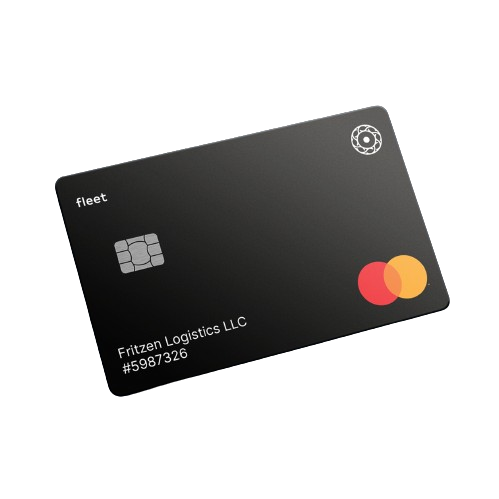
AtoB fuel cards are accepted anywhere Mastercard is accepted and include transparent pricing for fleet operations. The AtoB Discount Network delivers average savings of 42¢ off per gallon* on diesel at participating truck stops, plus per-gallon savings at over 30,000 locations.
AtoB offers two card options:
AtoB combines fuel savings, spend controls, reporting, and fleet expense management within a unified fleet financial platform. Both cards also include telematics-based fraud prevention with real-time GPS validation.
Best for: Over the road (OTR) fleets, mixed fleets, owner-operators, and growing businesses.
The WEX fuel card provides access to the WEX Nationwide Savings Network. Savings structures vary based on monthly fuel volume and network usage.
Out-of-network transactions may reduce savings. Driver PINs and time-of-day restrictions provide basic controls.
Fuelman provides fuel management tools and rebate programs through participating fuel networks, with savings that vary based on network participation, fuel volume, and billing structure.
The platform also supports fuel and maintenance purchases through its mixed fleet card program, although account and per-card fees may increase operating costs for smaller fleets.
The Shell fleet card provides access to Shell locations plus an extended partner network. Volume-tiered rebates reward higher monthly purchases.
No setup or monthly fees apply to the base card. Businesses should review current pricing, fee structures, and rebate requirements directly through Shell before applying.
Coast accepts payment at any Visa location with per-gallon savings at partner stations, plus cash back on non-fuel purchases and support on expense categories beyond fuel purchases.
Per-card monthly fees apply with no setup costs. Coast supports expense categories beyond fuel.
Fleet type determines which features matter most. Consider these profiles when comparing regional vs. OTR needs:
Selecting the right solution depends on where and how often your drivers fuel.
Follow these steps to evaluate your options when selecting the right fleet fuel card program for your operation:
A fleet card can save businesses significant money over time, but only if the network and controls align with actual operating patterns.
Modern platforms extend beyond simple fuel discounts.
Many now provide:
These capabilities help fleet operators improve fleet efficiency, reduce administrative burden, and make better business decisions.
AtoB combines fuel savings, controls, and reporting into one platform designed specifically for transportation businesses.
A commercial fuel card provides per-gallon discounts, driver-level spending controls, and automated fleet reporting. Many programs also support driver PINs, purchase restrictions, and IFTA-ready reporting capabilities.
Open-loop cards on the Mastercard or Visa network offer broad acceptance nationwide. Some closed-loop programs may include out-of-network restrictions or additional fees depending on where drivers purchase fuel.
Fuel discounts and rebate structures vary by provider, fleet size, fuel volume, and network participation requirements. Some programs provide stronger discounts at higher monthly fuel volume levels.
Many commercial fuel card providers negotiate fuel pricing agreements with participating truck stop networks. Eligible discounts are typically applied automatically at participating fueling locations.
Standard controls may include driver PINs, spending limits, merchant restrictions, and transaction alerts. Advanced platforms can also leverage the benefits of fleet telematics data for GPS validation, fuel-level tracking, and driver-level purchase monitoring.
* Average discount of 42¢ refers to realized average savings per gallon of truck diesel across AtoB customer transactions at merchant partner truck stops during H2 2025. The up to discount of $2.00 refers to max realized savings per gallon of truck diesel across AtoB customer transactions at merchant partner truck stops during H2 2025. Average discount of 5¢ off per gallon of unleaded is an average across AtoB customer transactions at merchant partner gas stations during H2 2025.

.jpg)