
Get started
Get started

Poor credit can be a huge roadblock for fleet transport companies and trucking business owners looking to equip their drivers with small business fuel cards. As a result, companies miss out on big savings and other operational benefits that fuel cards offer.
Fortunately, when it comes to company fuel cards, no credit check needs to hold up traffic permanently. Keep the wheels of your operation turning by learning how to get around it.
Key Takeaways:
{{CTA}}
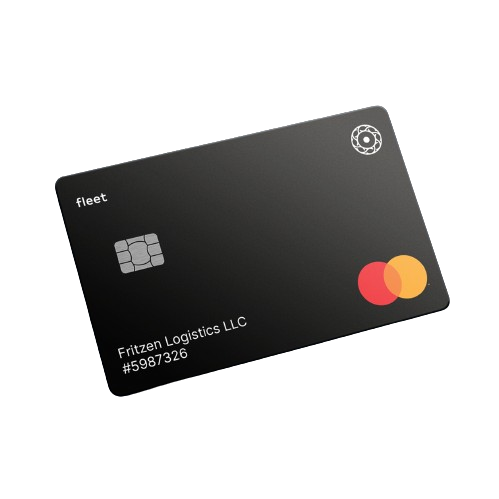
Fuel cards are like business credit cards that fleet companies can distribute to their drivers. While on the road, drivers can use the cards to make authorized, eligible purchases at in-network gas stations all over the country.
Fuel cards are provided by third-party companies intending to improve operations for fleet managers, or they are available at many of the nation's largest gas station chains.
When working with a third-party company's fleet fuel card, you benefit from the partnership they've created with the various gas stations and the back-end support that comes along with it.
Once the fuel cards are in hand, the fleet company can decide which additional purchases drivers can make with the card beyond fuel. For instance, many companies use fuel cards to cover other transportation expenses, such as:
When a fleet company enrolls in a fuel card program, each driver is issued a unique fuel card. These cards work similarly to traditional credit cards. Drivers swipe or insert them at the pump or repair shop, the transaction is processed, and the driver returns to the road.
Depending on the credit card issuer, drivers may have to enter certain credentials, such as a driver's identification number, when they swipe it at the pump. Most fuel card providers offer additional perks that enable companies to track and report expenses.
But before you can enroll in a fuel card program, you have to apply. And in many cases, the approval process includes one important step that can complicate matters for some businesses: the credit check.
Let's discuss the fuel card vs credit card ordeal. There are many similarities between a fuel card and a traditional bank credit card. In both cases, a customer is approved for credit up to a certain limit and signs an agreement to make monthly payments to keep the balance below the credit limit.
Regulations and stipulations vary from provider to provider, but in all cases, the process is a risk for providers. To help mitigate that risk, providers enact a list of qualifications that are necessary for approval.
One of those qualifications is often a business credit score above a certain threshold. Most fleet fuel card providers prefer to work with customers who maintain "low risk" to "moderate risk" credit scores. According to Dun & Bradstreet, Paydex scores of 80-100 indicate low risk, while scores of 50-79 indicate moderate risk. If your score is below 50, many fuel card providers may reject the application. Industry data shows most providers require at least a 580 FICO score or Paydex score of 50+ for approval (FreightWaves, 2026).
This presents a real challenge for truckers with bad credit. Limited credit history can hurt your score just as much as actual negative marks. A new owner-operator starting out may have no business credit history at all—making traditional fuel cards nearly impossible to get. Bad credit fuel cards and no-credit-check fuel cards exist specifically for these situations.
Fortunately, enrolling in a fuel card program isn't impossible if you have bad credit. Several fuel card providers now specialize in serving truckers with bad credit or no credit history at all. These fleet fuel cards offer the same benefits—fuel discounts, expense tracking, and security—without the credit barriers.

Most fleet fuel card providers require a credit check as a condition of approval. This is especially true of brand-specific fuel cards and some of the other big fuel card providers.
But with some fuel cards for bad credit, no credit check is required. If you have a score in the low 50s or high 40s—or no business credit at all—you could save a lot of time by finding a fuel card issuer that won't ask about your credit score. These bad-credit fuel cards work just as well as traditional fleet cards.
Here at AtoB, we focus on your business's future, not the past—that's why we offer a business gas card without a credit check required. Our AtoB Unlimited prepaid card provides:
Approval typically takes just 24-48 hours, with cards arriving within 7-10 business days. Prepaid fuel cards can activate immediately once funded.
When it comes to business fuel cards, no credit check is ideal if your credit isn't where you want it. But if you can't find a provider that's willing to skip the credit check entirely, you may be able to find one that will work with truckers with bad credit regardless.
Although the preferred credit score requirement for fuel cards falls within the low-risk category (80-100 on the Paydex scale), it is not set in stone. Fuel card providers determine their own qualification conditions, and some may be more interested in other aspects of your personal or business profile.
For example, a smaller fuel card provider may be more willing to work with you if:
This is why shopping around is crucial when selecting business fuel cards. Requirements vary greatly from provider to provider, so be sure to do your research.
Watch out for hidden fees: According to experienced truckers and industry analysis, some traditional fuel card providers charge transaction fees of $2.50 per purchase (TVC Pro-Driver), monthly maintenance fees of $8-$60, and out-of-network fees that eat into your fuel savings (DAT, 2025). Look for fuel card providers with transparent pricing and no hidden costs.
It's possible to pay a deposit with some business fuel cards. This can be a great solution for any business whose credit history is a barrier to its goals, and that has a profitable operation to leverage for a deposit.
When a business has bad credit or poor credit, it may take out a secured credit card or secured gas card. This is a regular credit card issued by a bank that's secured by funds equal to the credit limit. The business credit card user pays those funds and still makes regular monthly payments. Secured credit cards can be an effective way to improve credit and access an emergency source of money.
The idea is very similar to when you pay a deposit on a gas credit card. The business owner funds the fuel card in advance by paying a deposit for an agreed-upon amount to the fuel card provider.
This method has some drawbacks, especially regarding budgeting and available funds. Securing a gas credit card with a deposit means you need to be able to reasonably estimate how much money your fleet spends on gas and other authorized fuel expenses within a given timeframe.
That may sound simple—after all, you are likely already aware of the amount. But complications can arise due to:
Securing your fuel card for a greater amount than your budgeted fleet fuel expenses is generally a good idea. If possible, consider putting down a deposit that is one to two times greater than your budget amount.
When credit score is an issue, some fuel card providers will allow a company to have their cards personally guaranteed. This guarantor is usually a key figure in the company's management. Instead of using the business credit or the business owner's credit score, the credit card provider bases its decision on the guarantor's credit.
In this situation, the guarantor acts as a reference. Accounts and agreements are all held in the company's name.
Important consideration: Personal guarantees put your personal assets at risk if the business defaults. This is why many fleet owners prefer no-personal-guarantee fuel cards like AtoB, which evaluates your business potential rather than requiring personal liability. Note that WEX recently changed its policies to require personal guarantees for most applicants.
While searching for short-term solutions for bad credit, it may also be worthwhile to consider long-term strategies. The best way to eventually qualify for traditional fuel cards is to improve your business credit score.
The world of credit scores and how they're calculated can be confusing. However, taking steps to boost your credit score is fairly straightforward. Here are a few ways to improve your business credit score rating:
{{CTA}}

Fleet businesses looking for fuel cards without a credit check have several options beyond traditional credit-based fleet cards. Fuel cards for bad credit come in three main types. Choosing the right fuel cards depends on your fleet's size, cash flow, and operational needs.
A prepaid fuel card works similarly to a gift card—you load it with funds in advance, and drivers can use it to pay for fuel and other vehicle-related expenses. Prepaid fuel cards don't require a credit check, making them an excellent option for businesses with limited or poor credit history. Many truckers with bad credit start with prepaid fuel cards before graduating to credit-based fuel cards.
Pros:
Cons:
The best prepaid fuel cards offer real-time transaction monitoring and mobile app access so you can track fuel expenses as they happen.
A business debit fuel card is linked directly to your company's bank account, allowing drivers to purchase fuel without needing a line of credit. These cards provide the same tracking and reporting benefits as credit-based fuel cards but don't require a credit check.
Pros:
Cons:
A secured fuel card is a hybrid between a secured credit card and a prepaid card. Instead of being prepaid per transaction, the business places a security deposit, which acts as collateral. This deposit determines the spending limit, making secured fuel cards a viable option for businesses looking to build credit while managing fuel expenses.
According to forum discussions on TruckersReport, some providers like Pilot and Love's offer secured fuel cards with escrow accounts starting at $1,000 deposits. These fuel cards for bad credit help truckers establish payment history.
Pros:
Cons:
Fleet companies turn to fuel cards to help coordinate their fleet drivers' expenses while they're on the road. Fleet fuel cards make it easy for drivers to fuel up and make repairs. But fuel cards also present several benefits to fleet companies. Those benefits include:
Fuel costs are a major expense for fleet businesses. Even with a fuel card, optimizing fuel usage can lead to significant long-term savings. Here are three proven strategies to reduce fuel costs across your fleet.
GPS-based fleet tracking systems help businesses monitor driver routes, fuel consumption, and vehicle performance in real time. By optimizing route planning and reducing unnecessary detours, businesses can reduce fuel costs.
Best practices:
Driver habits directly impact fuel consumption. Poor driving behaviors like speeding, harsh braking, and excessive idling can increase fuel costs by up to 25%6.
How to reduce driver-related fuel waste:
Fuel prices vary significantly between locations. Without proper planning, your fleet might end up refueling at expensive stations, increasing operational costs.
How to save with smarter refueling:
Yes, truckers with bad credit can get fuel cards through several options. Prepaid fuel cards don't require a credit check at all—you simply load funds in advance and use them at gas stations. Some fleet fuel card providers, like AtoB, offer no-credit-check fuel cards that still offer discounts of $0.40-$0.60 per gallon. Secured fuel cards are another option for bad credit, where you provide a deposit that serves as your credit limit. These bad-credit fuel cards offer the same benefits as traditional fleet cards.
Most traditional fleet fuel card providers require a minimum business credit score. According to industry data, a Dun & Bradstreet Paydex score of 50 or above (roughly equivalent to a FICO score of 580+) is typically required for traditional fuel cards (FreightWaves, 2026). However, prepaid fuel cards and certain no-credit-check fuel card providers have no minimum credit score requirements, making these fuel cards ideal for truckers with bad credit or new businesses.
Some prepaid fuel cards now report payment activity to credit bureaus. AtoB fuel cards, for example, report to all three major business credit bureaus—Dun & Bradstreet, Experian, and Equifax. This means every on-time payment on your prepaid fuel cards can help build your business credit score over time, eventually helping truckers with bad credit qualify for traditional credit-based fuel cards with higher limits.
Common hidden fees with fuel cards include transaction fees ($2.50 per purchase with some providers, such as TVC Pro-Driver), monthly maintenance fees ($8-$60), out-of-network fees ($3 per transaction with some providers), and setup costs ($25-$50). Some fuel cards also charge per-gallon fees on fuel purchases. Look for fuel card providers with transparent, flat-rate pricing. AtoB fuel cards charge $3 per active card per month with no transaction fees or hidden costs.
For most fuel card providers, approval takes 24-48 hours once you submit your application. Fuel cards typically arrive within 7-10 business days. Prepaid fuel cards can often be activated immediately upon funding, getting your drivers on the road faster. Some fuel card providers offer expedited shipping for urgent needs. Bad credit doesn't slow down approval for no-credit-check fuel cards.
Budgeting, managing, and tracking your fleet's finances can be tricky, but it doesn't have to be.
AtoB is clearing the road to easier, simpler fleet management with our fleet fuel cards. With top-tier fuel discounts averaging $0.45 per gallon on diesel, best-in-class security features including $250,000 fraud protection, and universal acceptance at 99% of fuel stations, it's a single business gas card your fleet can use to pay for fuel, repairs, and tolls, no matter where they are.
Why truckers with bad credit choose AtoB fuel cards:
Truckers with bad credit and new fleets trust AtoB fuel cards because we make fuel discounts accessible to everyone. We can also guide you on how to get a prepaid gas card. To top it off, we provide a centralized, secure dashboard that lets you monitor everything in one place with real-time tracking.
It's time to take control of your fleet's finances. Fuel your fleet with AtoB fuel cards today!
{{CTA}}
Sources:
1. https://www.investopedia.com/terms/f/fleet-cards.asp
2. https://www.dnb.com/resources/db-credit-scores-ratings.html
3. https://www.expertmarket.com/fleet-cards/best-prepaid-fuel-cards
4. https://www.creditsuite.com/blog/wex-personal-guarantee/
5. https://www.investopedia.com/how-to-improve-your-credit-score-4590097
6. https://www.apexcapitalcorp.com/

.jpg)