
Get started
Get started


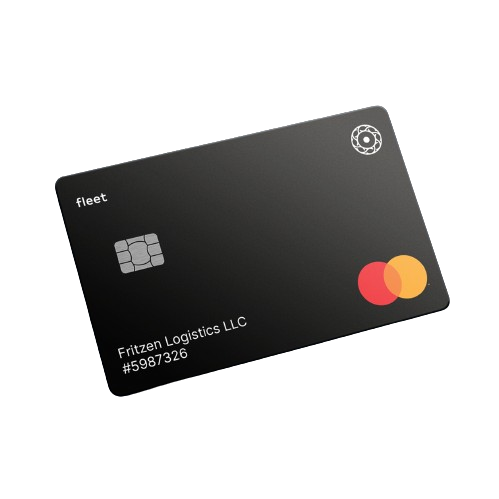
Fleet cards for trucking companies are specialized payment cards that help manage fuel purchases, control driver spending, reduce fraud, and simplify fleet expense tracking. Unlike traditional business credit cards, fleet cards provide fuel discounts, spending controls, transaction reporting, and tools designed specifically for transportation businesses.
In this guide, you will learn how fleet cards work, the different types of fuel cards available, the key benefits they offer trucking companies, and what to look for when choosing the right fleet card for your operation.
{{CTA}}

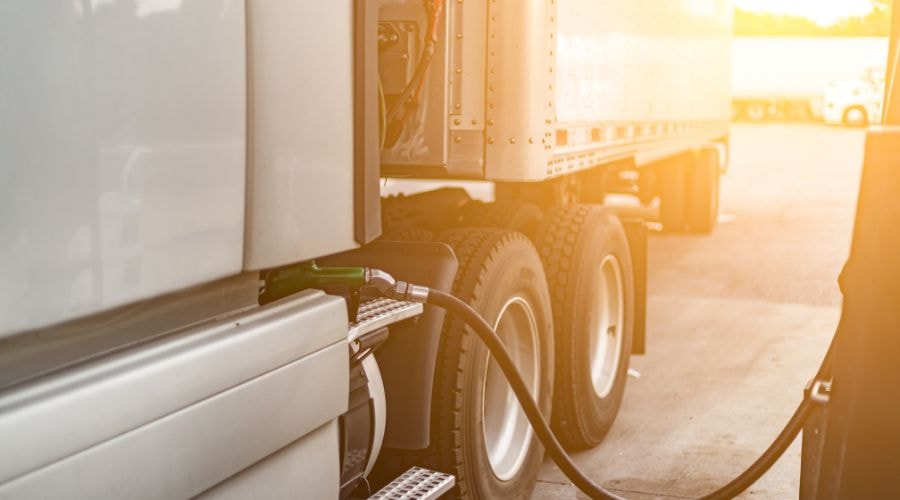
When a driver arrives at a truck stop or retail fuel location, they use their card to purchase fuel or other approved expenses. Depending on the fleet card provider, the driver may be asked to enter information such as a PIN, driver ID, or vehicle number before the transaction is approved.
The fleet card account verifies that the purchase meets the company's spending policies. Controls can include approved merchants, spending limits, fuel types, transaction times, and geographic restrictions.
If a card is lost or an unauthorized purchase is attempted, fleet managers can often lock or disable the card through their fleet management platform.
Unlike traditional payment methods, fleet fuel cards offer detailed reporting on each transaction. Fleet managers can review fuel purchases, spending trends, merchant locations, and driver activity without collecting paper receipts.
The reporting and controls available through modern fleet cards help businesses identify opportunities to lower fuel costs, improve compliance, and reduce administrative work across a fleet of vehicles.
Modern fleet cards offer:
Ready to streamline your fuel management? Get started with AtoB's fleet card solution and start saving on fuel costs today.
Many businesses compare fleet cards and traditional business credit cards when evaluating fuel management solutions. While both can be used to make purchases, they serve different purposes.
Fleet fuel cards are designed specifically for companies that operate vehicles. They provide fuel-focused controls, transaction reporting, and tools that help businesses monitor driver spending.
Many fleet cards help address common challenges such as unauthorized purchases, fuel fraud, and manual expense reporting.
Business credit cards can typically be used for a wider range of purchases. However, they often lack the specialized controls and reporting features that fleet managers need to oversee fuel expenses across multiple drivers and vehicles.
For companies managing a fleet of vehicles, a dedicated fuel card for your business often provides greater visibility and operational control. Businesses primarily looking for general spending flexibility may prefer a traditional business credit card.
Although fuel purchases are the primary use case, many fleet fuel cards offer functionality that extends beyond fueling. Depending on the provider, a fleet card can also be used for:
The ability to manage multiple expense categories through one platform helps businesses simplify operations and reduce administrative overhead.
There are several types of fleet cards, each serving different operational needs and business profiles.
Credit-based fleet cards allow companies to make fuel purchases without upfront deposits, operating similarly to traditional business credit cards. These cards offer payment flexibility by deferring fuel costs until the next billing cycle, which helps manage cash flow during periods of variable revenue. Credit approval typically requires business and personal credit evaluations.
Cash-secured or prepaid fleet cards require companies to load specific amounts before usage. These cards eliminate credit requirements and approval delays, making them ideal for newer businesses or those with limited credit history. The prepaid structure provides enhanced budgetary control by limiting spending to preloaded amounts.
Closed-loop fleet cards work within specific fuel networks, typically providing deeper discounts (often 20-40¢ per gallon) but limiting where drivers can fuel. These cards are ideal for operations with predictable routes and access to network locations.
Open-loop or universal fuel cards function anywhere standard credit cards are accepted, providing broader operational flexibility. While discounts may be lower (typically 3-15¢ per gallon), the universal acceptance eliminates the need to plan routes around specific fuel networks.
Fleet cards deliver substantial operational and financial benefits that extend far beyond simple payment processing.
Fuel Cost Savings
The primary benefit comes from fuel discount programs, with savings ranging from 10¢ to 30¢ per gallon depending on provider networks and purchase volumes. A small fleet consuming 6,000 gallons monthly can save $1,800-$21,600 annually with a 30¢ per gallon discount.
Enhanced Security Features
Modern fleet cards provide comprehensive fraud protection through:
Operational Efficiency Improvements
Fleet cards streamline operations by:
Cash Flow Management
Fleet cards enhance cash flow by optimizing billing cycles and consolidating expenses. Many providers offer interest-free weekly or biweekly billing that aligns fuel payments with revenue collection cycles.
{{CTA}}
Fleet cards benefit businesses across various transportation sectors, offering different solutions tailored to specific operational profiles.
Long-haul trucking companies benefit most from fleet cards with closed-loop networks with extensive truck stop coverage and substantial fuel discounts. These fleets typically achieve the highest return on investment due to large fuel volumes and consistent routing patterns.
Regional and local fleets benefit from universal acceptance fleet cards that provide flexibility for varied routing patterns. These operations often prioritize convenience and broad network coverage over maximum fuel discounts.
Owner-operators and independent contractors can access specialized fleet card programs designed to address their unique needs, including simplified credit approval processes and direct billing arrangements that reduce financial risk for contracting companies.
These operations benefit from multi-service fleet cards that cover fuel, maintenance, parts, and other vehicle-related expenses through unified payment systems with comprehensive spending controls.
Discover which AtoB fleet card solution works best for your operation and start maximizing your fuel savings.
Fleet card transactions follow enhanced security protocols that distinguish them from traditional credit card usage.
Transaction Process
Data Collection and Reporting
Each transaction generates comprehensive data, including:
This data automatically populates expense management systems and regulatory compliance reports, eliminating manual data entry requirements.
Modern fleet cards incorporate sophisticated security measures that provide comprehensive protection against fuel theft and unauthorized usage.
Spending Controls
Security Technologies
Advanced fleet cards use One-Time PIN (OTP) technology that generates unique codes for each transaction, delivered to authorized users' mobile devices. This system prevents skimming attacks and unauthorized usage even if lost or stolen cards are compromised.
Real-Time Monitoring
Fleet cards provide immediate alerts for:
Fleet card savings mechanisms vary significantly among providers, requiring careful evaluation to maximize benefits.
Discount Structures
Calculating Total Savings
Effective fleet card evaluation requires analyzing the total cost of ownership, including:
For example, a fleet using 10,000 gallons monthly with a 25¢ per gallon discount saves $2,500 monthly ($30,000 annually), easily justifying modest monthly fees while providing substantial net cost savings.
The fleet card application process has streamlined significantly, with most fuel card providers offering digital applications completed in 10-30 minutes.
Required Documentation
Application Process
Alternative Qualification Methods
Some providers offer cash-secured programs that eliminate credit checks entirely, appealing to newer businesses or those with credit challenges. These programs require prepayment but provide immediate access to fleet card benefits.
Fleet card fee structures vary dramatically among providers, requiring careful analysis to determine total program costs.
Common Fee Types
Subscription Models
Some providers offer subscription-based pricing that covers an unlimited number of cards within tiered service levels. This model ranges from $39 per month (Basic) to $99 per month (Enterprise), potentially benefiting larger fleets with multiple cards.
Zero-Fee Alternatives
Competitive pressure has led several fuel card providers to eliminate fees. Some offer zero monthly fees, setup charges, and replacement fees, making them attractive for large fleets where per-card fees would accumulate substantially.
With multiple providers available, it is important to evaluate which fleet fuel card is right for your operation. When comparing options, look for a card that aligns with your fleet's needs in the following areas:
Review where drivers typically fuel and see which fleet card providers offer acceptance at those locations.
The best fuel card programs provide detailed transaction data that supports better operational decision-making.
Look for a card with customizable controls that can help reduce unauthorized spending and improve accountability.
Different providers offer different savings opportunities. Evaluate fuel rebates, network coverage, and program requirements when comparing options.
Some fleet fuel cards offer tools for maintenance tracking, reporting, payroll integrations, or broader fleet financial management. Choosing the right fleet fuel card can help improve visibility, reduce costs, and support long-term business growth.
Experience AtoB's comprehensive fleet card solution with universal acceptance, competitive savings, and industry-leading support.
Contemporary fleet card providers have evolved into comprehensive fleet management platforms offering integrated services beyond payment processing.
Fleet Management Tools
Financial Services
Technology Solutions
While fleet cards offer substantial benefits, implementation challenges can diminish their effectiveness if not addressed through proper planning and management.
Driver Adoption and Compliance Issues
Challenge: Drivers may resist new payment procedures or fail to follow established protocols.
Solution: Provide comprehensive training, clear policies, and ongoing support to ensure proper card usage and data collection compliance.
Network Limitations and Route Planning
Challenge: Closed-loop networks may not align with operational routes, forcing drivers to detour for fuel.
Solution: Evaluate network coverage during the selection process and consider universal cards for fleet operations with diverse routing patterns.
Integration Complexities
Challenge: Connecting fleet cards with existing management systems can prove technically challenging.
Solution: Verify integration capabilities before selection and plan adequate implementation time with technical support.
Cost Management and Fee Accumulation
Challenge: Multiple fees can erode fuel discount benefits if not carefully monitored.
Solution: Calculate the total cost of ownership, including all fees, and regularly review statements to identify unexpected charges.
No, fleet cards benefit any business operating multiple vehicles, including delivery services, construction companies, government fleets, and service businesses. Different card types are optimized for various fleet sizes and operational patterns.
Yes, many fleet card providers offer specialized programs for independent contractors, including direct billing arrangements and simplified credit approval processes. Some programs require no personal guarantees from business owners.
Yes, fleet cards have expiration dates and require periodic renewal. Most providers automatically issue replacement cards before expiration to prevent operational disruptions.
Unused balances typically remain available for future fuel purchases unless accounts are closed. Some providers may charge inactivity fees for dormant accounts, so review terms carefully.
Yes, modern fleet cards offer sophisticated time-based controls that restrict usage to specific hours, days of the week, or operational schedules. These controls enhance security and prevent unauthorized after-hours usage.
International acceptance varies by provider and card network. Some cards are accepted in Canada and Mexico, while others are only valid in U.S. locations. Verify international capabilities if cross-border operations are required.
Most providers accept single-vehicle operations, although some programs require a minimum fuel volume or multiple vehicles to be used. Requirements vary significantly among providers, with options available for operations of all sizes.
Cash advance capabilities are limited with most fleet cards, as they're designed primarily for fuel and maintenance purchases. Some providers offer limited cash access for operational emergencies, but fees may apply.
Fleet card transactions are processed in real-time at the point of sale, with data typically appearing in management systems within minutes. Billing typically occurs on a weekly or monthly cycle, depending on the provider.
Yes, specialized EV fleet cards are emerging that provide access to charging networks, simplified reimbursement for diverse charging scenarios, and integration with charging management systems. These cards address unique challenges of electric fleet management.
The right fleet fuel card can help trucking companies lower fuel costs, improve control, and simplify expense tracking. Beyond fuel savings, the best fleet cards also offer security, reporting, and tools that support day-to-day fleet management.
AtoB brings fuel rebates, spend controls, fraud prevention, and fleet expense management together in one platform designed for trucking businesses. Start maximizing your fleet's potential with AtoB's advanced fuel card solution and discover how much your operation can save while gaining operational control and security.
* Average discount of 42¢ refers to realized average savings per gallon of truck diesel across AtoB customer transactions at merchant partner truck stops during H2 2025. The up to discount of $2.00 refers to max realized savings per gallon of truck diesel across AtoB customer transactions at merchant partner truck stops during H2 2025. Average discount of 5¢ off per gallon of unleaded is an average across AtoB customer transactions at merchant partner gas stations during H2 2025.
{{CTA}}
Citations:
[1] https://sokolis.com/resources/blog/top-6-fleet-card-benefits-for-your-trucking-company/
[2] https://stripe.com/resources/more/what-is-a-fleet-management-card-what-businesses-need-to-know
[3] https://vivacf.net/insights/benefits-fuel-cards-trucking-business/
[4] https://www.geotab.com/blog/fleet-fuel-cards/
[5] https://www.wexcard.com/does-your-business-need-a-fleet-card/
[6] https://cnrgfleet.com/fuel-card-fee-comparison-see-how-much-fleet-fuel-cards-cost/
[7] https://www.pfleet.com/blog/best-fleet-fuel-cards-for-business
[8] https://www.multiservicefuelcard.com/news/is-a-fuel-card-worth-it/
[9] https://www.multiservicefuelcard.com/news/otp-how-one-time-pin-technology-enhances-fuel-card-security/
[10] https://gomotive.com/products/features/ifta-reporting-automation/

.jpg)