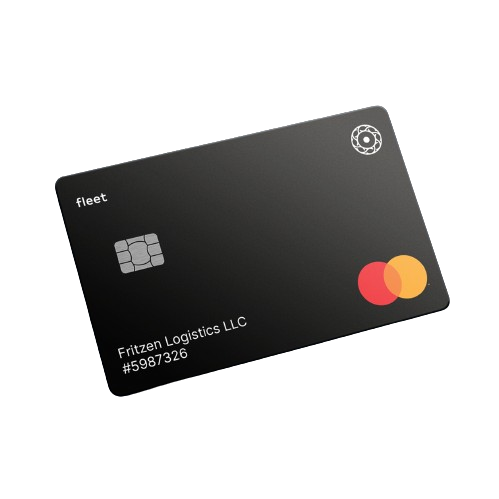

Get started
Get started


Yes, gas cards can build credit—but only if you choose the right one. Many gas credit cards report your payments to credit bureaus, which helps establish your credit history over time. The catch? Not all cards report, and the ones that do may hurt more than help if you don't use them correctly.
{{CTA}}

Gas credit cards work like any other credit card when it comes to building credit. Each month, the card issuer reports your account activity to credit bureaus. That activity includes your balance, credit limit, and whether you made your payments on time.
Your credit score is calculated using five factors:
When you use a gas card responsibly and pay your balance in full each month, you're demonstrating the exact behaviors that raise credit scores. But gas cards can also damage your score if you:
Not every gas card reports to credit bureaus. Before you apply, confirm that the card issuer reports your payment history. Otherwise, you could use the card perfectly for years and see zero impact on your credit score.
Examples of consumer gas cards that may report to personal credit bureaus include cards issued through major financial institutions and fuel brands such as Shell, Chevron/Texaco, ExxonMobil, and BP.
Credit reporting policies, eligibility requirements, rewards structures, and account terms may vary by card product and issuer.
See each issuer’s website for the most current information regarding credit bureau reporting, rewards programs, fees, and account terms.
Fleet fuel cards that report to all three business credit bureaus:
AtoB is one of the few fleet cards that reports to Dun & Bradstreet, Experian Business, AND Equifax Business—building your business credit three times faster than cards that only report to one bureau.
How to verify before you apply:
If they won't give you a straight answer, move on to a card that confirms monthly reporting.
There's an important distinction many articles miss: consumer gas credit cards and fleet fuel cards serve different purposes and build different types of credit.
For fleet owners and owner-operators, building business credit offers major advantages:
Pro tip: AtoB is one of the only fleet fuel cards that reports to all three major business credit bureaus (Dun & Bradstreet, Experian Business, and Equifax Business) without requiring a personal guarantee or credit check. This triple-bureau reporting accelerates credit building compared to cards that only report to one or two bureaus.
Fleet fuel cards offer a way to build business credit that consumer gas cards can't match. Many fleet card providers report your payment history to business credit bureaus on a Net-30 basis.
Businesses interested in using fleet cards to help establish or strengthen business credit should confirm current reporting policies directly with each issuer before applying.
*Reporting practices, personal guarantee requirements, and approval criteria are subject to change and may depend on factors such as business revenue, credit history, entity type, and selected card program.
Why AtoB stands out: Most fleet cards only report to one or two bureaus—or require a personal guarantee that puts your personal credit at risk. AtoB reports to all three business bureaus for both its prepaid (Unlimited) and credit (Flex) cards, and neither requires a personal guarantee or a hard credit check. This means you can build business credit from day one, regardless of your current credit situation.
{{CTA}}
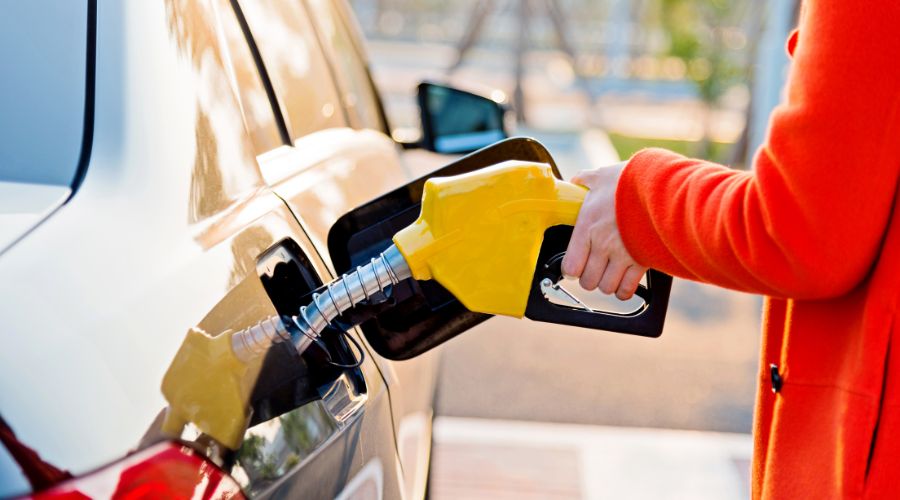
Gas cards come with risks that can hurt your credit score if you're not careful.
High interest rates
Gas credit cards often carry APRs well above average credit cards:
Sources: Federal Reserve G.19 Report, Bankrate, U.S. News
Solution: Pay your balance in full every month to avoid interest entirely. Or consider AtoB's prepaid Unlimited card—you fund it in advance, so there's no interest charges, no credit check, and you still get fuel discounts and credit bureau reporting.
Low credit limits
How to manage utilization:
Limited acceptance
Consumer gas credit cards typically offer rewards in two forms:
The cents-per-gallon math:
Fleet fuel cards take a different approach—direct discounts at the pump, averaging 40-60 cents per gallon or more at truck stops. For high-volume fuel purchases, these direct savings typically beat rewards credit card programs.
Yes, but your options vary based on your credit situation:
Fair to good credit (580+):
Bad or no credit (below 580):
Businesses should verify current approval requirements, reporting practices, fees, and rewards directly with each provider before applying.
Business owners with bad personal credit:
The best gas cards do both: help you build credit while saving money on fuel.
Typical savings by card type:
AtoB's savings come from direct discounts at over 3,500 truck stops and 30,000+ gas stations nationwide—not points or rewards that take months to accumulate. Combined with triple-bureau credit reporting, you're building your business credit profile while putting real money back in your pocket on every fill-up.
Most card issuers report to credit bureaus once per month, typically at the end of your billing cycle. Expect to see a new gas card appear on your credit report within 30-60 days of your first purchase. Business credit bureaus like Dun & Bradstreet may take slightly longer—up to 90 days for a new tradeline to appear.
Yes. Each application triggers a hard inquiry that can temporarily lower your score by 5-10 points. Multiple new accounts also reduce your average account age, which makes up 15% of your FICO score. For most drivers, one or two cards that match your fueling habits is plenty. Fleet owners are better off consolidating fuel spending on a single fleet card with universal acceptance—like AtoB—rather than juggling multiple station-branded cards with limited networks.
For consumer gas cards, yes—authorized users typically get credit history reported to their personal credit reports, which can help family members build credit. For fleet fuel cards like AtoB, driver cards are tied to the business account and build business credit only, not the driver's personal credit. This separation is actually a benefit for fleet owners: your drivers get the fuel discounts and spending controls, while the positive payment history strengthens your company's credit profile without affecting individual employees' personal finances.
Gas cards can absolutely help you build credit—personal or business—if you choose a card that reports to credit bureaus and use it responsibly.
Your action plan:
For truckers and fleet owners, AtoB offers what no other fleet fuel card can match: reporting to all three business credit bureaus (D&B, Experian Business, and Equifax Business) without requiring a personal guarantee or credit check—on both prepaid and credit cards. Add in discounts of $0.45-$2.00 per gallon at 99% of fuel stations nationwide, and you're building credit while maximizing savings on every mile.
Ready to start building business credit while saving on fuel? Get started with AtoB—no personal guarantee, no credit check, and monthly reporting to all three business credit bureaus from your very first fill-up.
{{CTA}}
References:

.jpg)